
War with Scotland and Strategic Restraint
The Constant PrincessThis thread traces the rise of Scottish danger, Katherine’s preparations, the victory at Flodden, and her refusal to answer defeat with annihilation.
increasing Bearing strength in each event
 decreasing
Bearing strength in each eventdecreasingRaids at the Border
The Northern Threat
Sea and land exposed
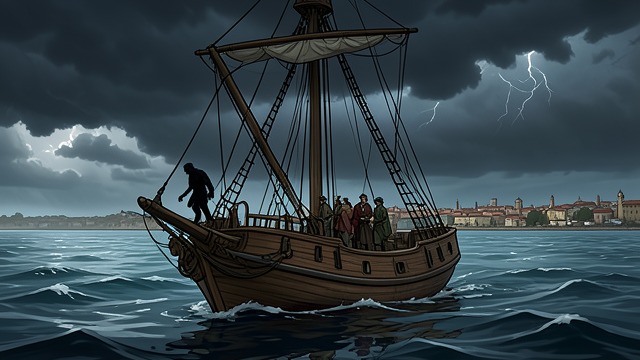
Scottish privateers attack English shipping while border raids continue. Katherine sees these actions as signs of a larger security problem.
The navy responds
Edward Howard captures Andrew Barton, but the victory does not settle the dispute. The sea and border remain connected fronts.
The Pope Intervenes

Diplomacy Buys Time
A discreet appeal
Katherine lets Richard Bainbridge carry her concerns to the Pope. She frames Scottish aggression as a threat to the wider Christian alliance.
A temporary check
Papal pressure forces James IV to apologize and restrains immediate escalation. Katherine secures time without committing England to an early war.
War Begins in the North
An Invasion Exploits Absence
A divided kingdom
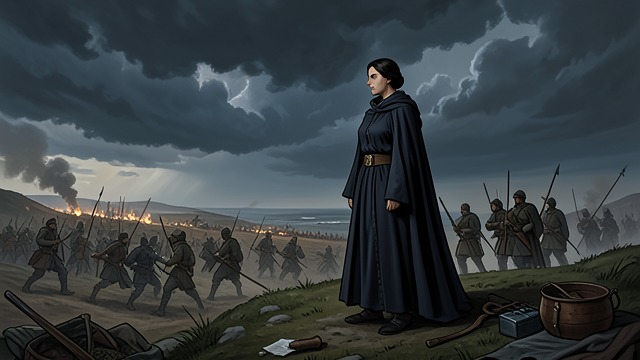
With Henry and the main army overseas, James IV crosses the border and gathers a large force. Katherine becomes the central authority responsible for defense.
Mobilization
She calls up troops and rides with them, refusing to let the army interpret her absence as impending defeat. The crisis tests her claim to rule.
The Battle at Flodden

The Scottish Army Broken
Strategic restraint
Katherine keeps a reserve force and urges Thomas Howard, Earl of Surrey, not to attack strong ground uphill. Her advice respects the difficulty of the terrain.
A decisive result
Surrey’s army defeats the Scots and James IV dies. The victory prevents the invasion from reaching the southern kingdom.
Peace After Victory

Restraint Replaces Revenge
The temptation to advance
With Scotland weakened, Katherine could order an invasion and destroy the country’s capacity to resist. Her parents’ example points toward further conquest.
A different decision
She permits surrender and offers peace. She believes that hatred would outlast the campaign and endanger the next generation.
Summer 1511, after Andrew Barton’s attacks
1511, during the border dispute
Summer 1513, while Henry campaigns in France
10 September 1513, at Flodden
September 1513, immediately after Flodden
